Drywall and Plaster Repair in Hastings-on-Hudson, NY
Plaster that's cracking, ceilings browned by ice-dam leaks, holes from the last remodel. Each is repaired properly, worked into the old finish until it blends, and handed back ready to paint.
- Plaster and lath, not just drywall
- Cracks fixed so they stay closed
- Ceilings after leaks and ice dams
Hastings-on-Hudson houses: plaster first, drywall later
This is an old village, and the walls show it. Census Bureau survey data covering 2020 through 2024 puts 3,272 homes in Hastings-on-Hudson. Nearly half, 1,600, went up before 1940. Another 1,316 arrived between the 1940s and the 1960s. Just 356 are from 1970 or later.
That changes how repairs go. A pre-war wall is generally plaster over wood lath, dense and hard, and it fails differently from drywall. Postwar houses can be either one, and sometimes both, with a drywall addition grafted onto a plaster original. So the first question on any wall here is what it's made of. Guess wrong and the repair won't last.
Then there's the paint. The EPA's lead renovation rule applies to repairs and repainting that disturb paint in homes from before 1978, which is most of the village. Whoever prices the job should be able to say how the sanding dust stays put. Ask.
Landlords: the turnover window is short
Roughly one occupied home in five here is a rental; Census figures show 640 of 3,164. The gap between one tenant's keys and the next tenant's boxes is usually a few days, and the walls have to be fixed inside it. The turnover guide covers which damage to patch, when a full repaint beats touch-ups, and how to order the work so the unit shows well.
Read the rental turnover guide
Other write-ups for owners and managers live in the wall repair guides.
The repairs, one by one
Almost every wall problem in an older Westchester house lands in one of these four. Each has a page that goes deeper.
-
Old plaster, pinned back up
Hollow, cracked or sagging plaster fastened back to its lath and skimmed flat, so the old wall stays.
-
Cracks taped so they stay shut
Door-corner, seam and spider-web cracks reopened, reinforced and finished instead of just smeared over.
-
Eave ice, brown ceilings
Meltwater stains and soft spots dried out, then sealed or swapped for new board and refinished.
-
Wire, pipe and duct holes
Openings from rewiring, plumbing and duct work backed, closed and blended after those trades pack up.
Put the damage in writing
Say what's wrong and where. One sentence will do. Size, room, and plaster or drywall if you know it all make the first price conversation sharper.
Rather talk? (914) 895-5272
Call 7 days, 7am–9pm
Next, the wall gets a phone call: the Westchester pro who will quote it hears you out and works up a number, and nothing is scheduled without your OK.
Reading the marks on a Hastings wall
Wall damage repeats itself. Here's what the usual marks point to, and the page that covers each fix.
| What you see | Likely cause | Where it's covered |
|---|---|---|
| Slanted crack off a door or window corner | Ordinary seasonal flexing of the frame | Corner cracks |
| Ceiling that gives under your hand | Broken plaster keys; the plaster is just resting on the lath | Reattaching loose plaster |
| Tea-colored blotch by an exterior wall after snow | Meltwater pushed up under the shingles | Ice-dam stains |
| Little domes lined up down a wall | Nails backing out as the studs dry | Nail pops |
| Raised strip along a joint | Joint tape lifting off the board | Loose seam tape |
| Soft, drooping patch overhead | Water held in the board or plaster | Soaked ceilings |
| Square holes spaced along a wall | Wire fished through by an electrician | Closing trade openings |
Once the electrician and plumber pack up
New circuits, a relocated drain, a heat pump line set, a run of data cable for a home office. Each of those opens a wall, and none of those trades finish drywall. They leave the holes, neat or not, and go on to the next job.
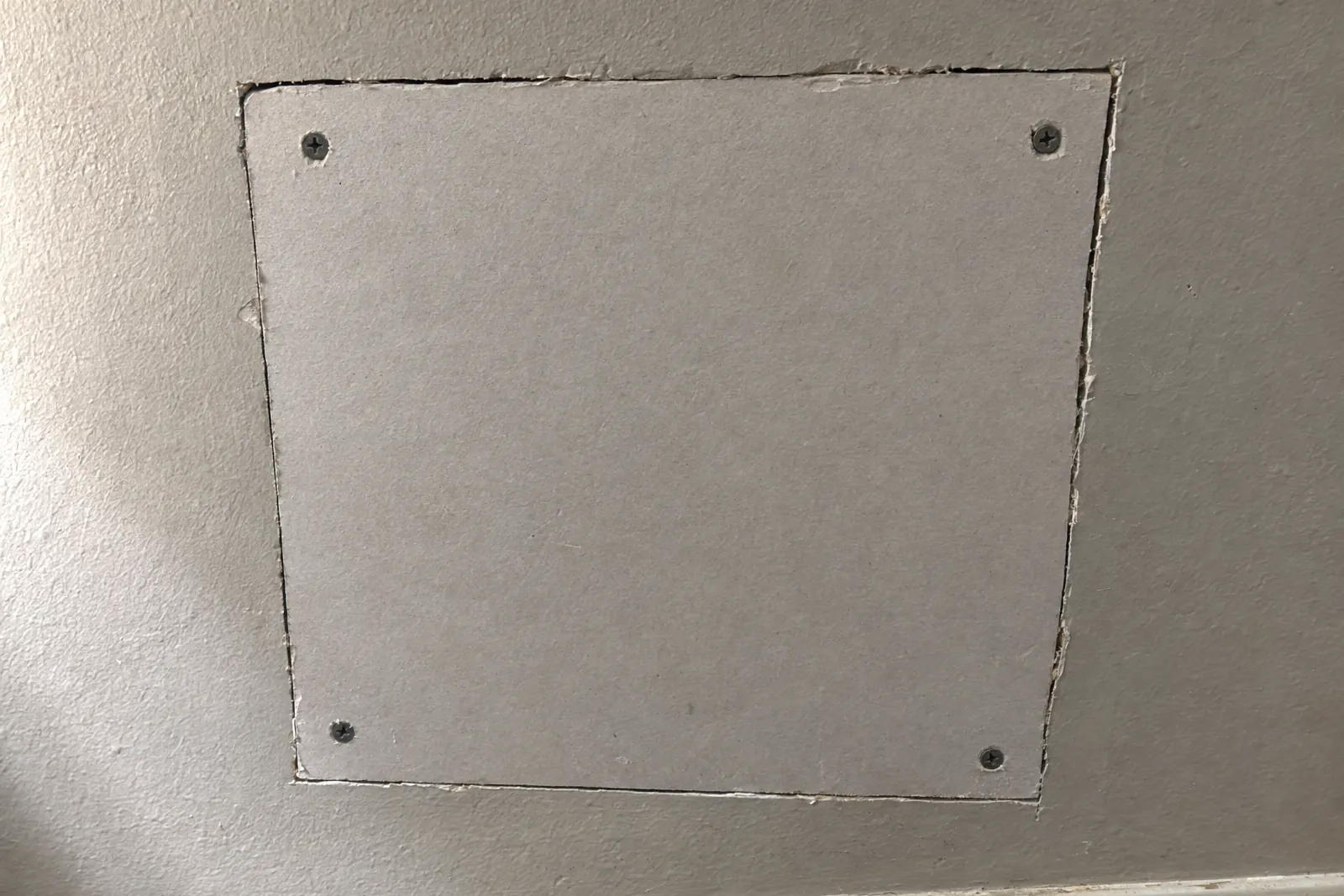
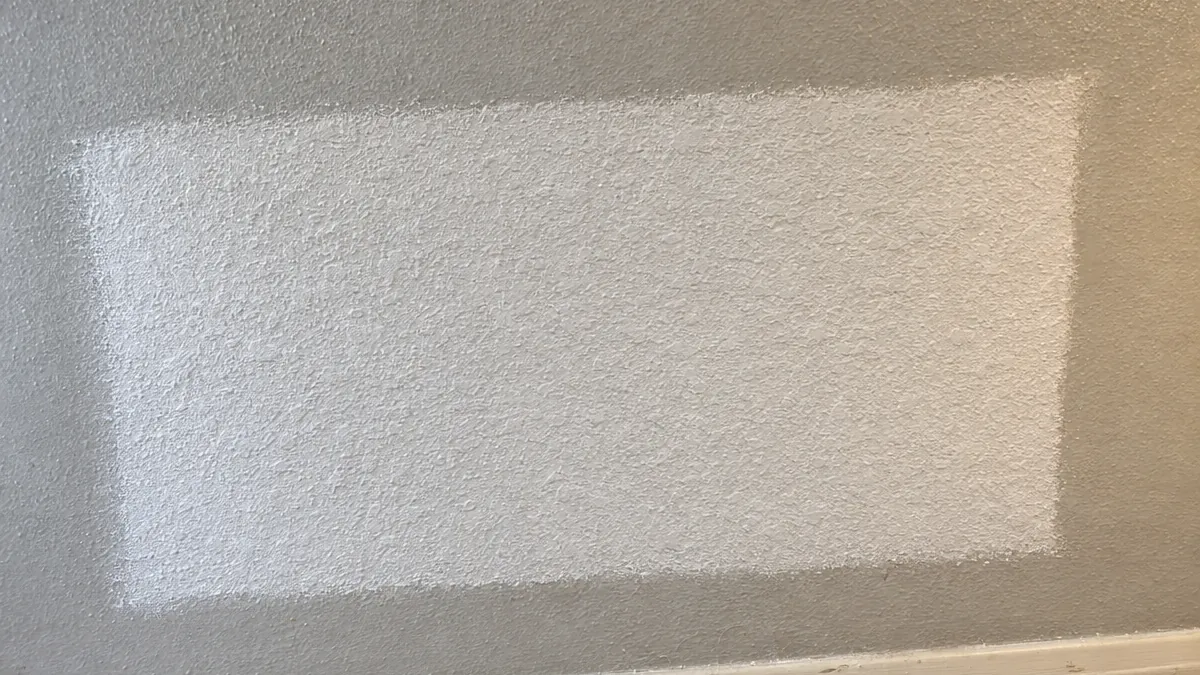
Closing them properly takes three things. Backing first, so the insert has wood or clips to screw into. A piece set dead flush, which in plaster means shimming new board out to the old thickness. Then tape, light coats spread wide, and the texture built up to match before primer. Book it after any inspection and ahead of the painter.
Dobbs Ferry to Yonkers, and the village between
Hastings-on-Hudson stretches from the Hudson on its west side to the Saw Mill River on its east. Wall and ceiling work gets set up anywhere in the village, plus the five places listed here.
- Dobbs Ferry. The next village up the river, which, like Hastings, belongs to the town of Greenburgh.
- Yonkers. The city along the southern line, and Westchester County's biggest by population.
- Ardsley. A village a short drive to the northeast, also inside Greenburgh.
- Greenburgh. The town Hastings sits in; its unincorporated neighborhoods lie east of the village.
- Edgemont. An unincorporated community in Greenburgh, a few miles east.
Before the lease ends or the house is listed
Buyers spot the ceiling blotch and the crack over the door first. A landlord's walk-through heads straight for the doorknob hole. Listing photos shot with low light skimming the walls make every sloppy patch look twice as bad.
Fix what reads as damage: holes, open cracks, water marks, lines of popped nails, crushed corners. Leave honest wear alone on walls that are getting repainted anyway. Little scuffs and picture-hook holes are paint prep, not repair.
Get repairs in several days ahead of the painter. Compound has to cure, and new patches need primer before the topcoat or they flash. With a photographer booked, the order is repairs, then paint, then pictures.
When water gets into a Hastings ceiling
Breaker off, room cleared
Bulging ceiling? Before touching it, cut the electricity to every ceiling fixture near the bulge at the breaker box. After that, nobody stands under it, and a pail goes on the floor.
Shut off the water
A plumber for a pipe, a roofer for a roof. With an ice dam, the dripping stops when the ice does; a roofer can clear the eaves.
Fans, then a meter
Fans and patience. The board or plaster gets a moisture reading before anyone chooses what stays.
Save it or swap it
Dry and solid: seal the mark and paint. Soft or drooping: remove it to the joists, dry the space, put in new board.
Spackle it yourself, or call it in
Small stuff, a homeowner can tackle. The line is size and texture. A broad patch that has to vanish on a flat, well-lit wall takes a practiced hand, and a botched one costs more to redo than a good one costs the first time.
Homeowner territory
- Nail holes and small anchor holes
- One popped nail you can lock down with a screw right next to it
- Hairline cracks in paint on a wall that's about to be repainted
Call in a pro for these
- Ceiling damage bigger than your palm
- Plaster that moves, sounds hollow or crumbles
- Holes big enough for a fist
- Water marks, until the board has been checked dry
- Cracks that returned after an earlier fix
Five steps between the photo and paint-ready
- 1
Ring or send a snapshot
Or write it up on the form. Mention the room, the size and your best guess at the cause.
- 2
A conversation about the wall
Next comes a call. The pro on your job asks about the damage, what's behind it and what the wall is built from.
- 3
A price up front
The quote comes before work begins, and nothing gets scheduled without your yes.
- 4
Repair days
Loose material fastened, the hole or crack backed and filled, coats spread thin, surface texture reproduced.
- 5
Primer-ready, painter-ready
Sanded smooth, primed if that was agreed, and clean enough for the painter to start.
Cracked, stained or holed: get it priced
Plaster or drywall, wall or ceiling, one hole or a whole floor of them. Ring the number, text a snapshot, or put it in writing on the quote page; the job gets a plain answer either way.
One conversation, one clear number from a local pro, and the decision stays yours.